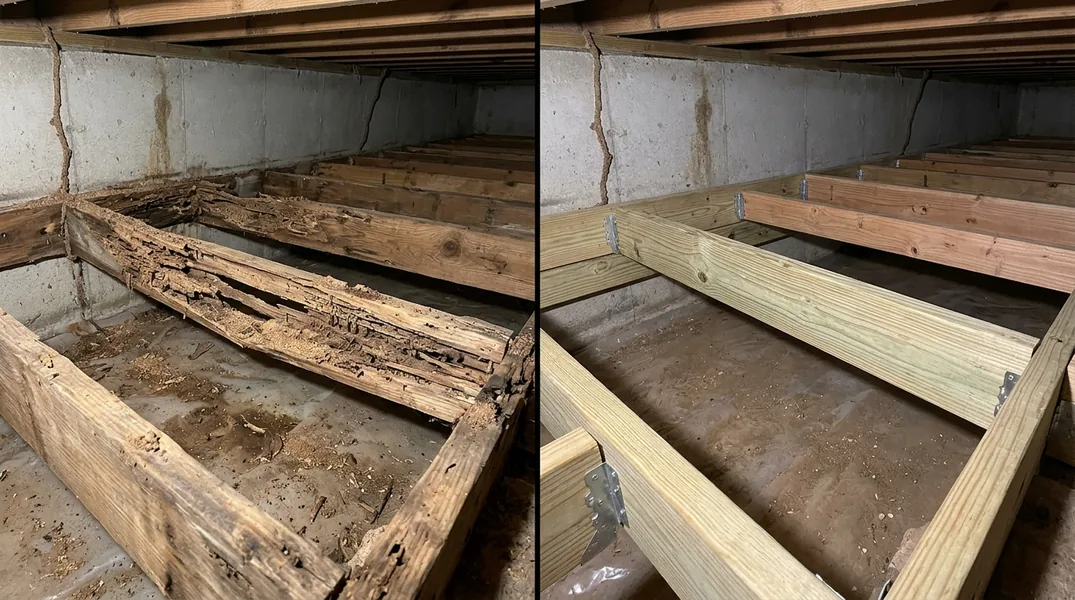
Why Identifying Wood Damage Matters for Your Home
If you own a home in Sioux Falls, you know that our climate and seasonal changes can be tough on wood structures. From harsh winters to humid summers, the conditions here create an ideal environment for various types of wood damage. The problem is that dry rot, termite damage, and carpenter ant damage can all look similar to an untrained eye, yet they require completely different treatment approaches.
Understanding what's actually damaging your home is the first critical step toward protecting your investment. Misidentifying the problem could mean wasting money on the wrong repairs or, worse, allowing the damage to spread unchecked. Whether you're noticing soft spots in your foundation, seeing small holes in wooden beams, or discovering crumbling wood in your attic, knowing the difference between these three common wood threats will help you take action quickly and confidently.
Dry Rot: The Silent Wood Destroyer
Wood Rot & Dry Rot Repair is one of the most common services we provide because dry rot is sneaky and often goes unnoticed until significant damage has occurred. Despite its name, dry rot is actually caused by moisture, not dryness. A fungus thrives in damp wood, breaking down the cellulose and leaving behind a crumbly, brittle material that looks like powder or sawdust.
So what does wood rot look like? Affected wood typically appears darkened or discolored, often taking on a brownish or grayish hue. The wood becomes soft and spongy to the touch, and if you press on it with a screwdriver or knife, it will crumble or break apart easily. You might also notice a musty smell coming from affected areas, which is the odor of the fungal growth. Unlike termite or carpenter ant damage, dry rot doesn't create visible holes or tunnels. Instead, it causes the wood to lose its structural integrity from the inside out, creating deep cracks that run across the grain in a distinctive cubic pattern.
Dry rot thrives in areas with poor ventilation and high moisture, such as basements, crawl spaces, bathrooms, and around roof leaks. In Sioux Falls, we see a lot of dry rot damage in older homes where water management has been neglected or where foundation cracks allow groundwater to seep in.
Termite Damage: The Structural Threat
Termites in South Dakota are less common than in warmer states, but they do exist here and can cause severe structural damage when present. These wood-eating insects work from the inside out, consuming the wood's cellulose while leaving a thin outer shell intact. This makes termite damage particularly dangerous because a wall or beam can appear solid from the outside while being hollowed out on the inside.
When you're looking at potential Termite Damage Repair situations, there are several telltale signs to watch for. Termite damage typically shows up as a honeycomb-like pattern of galleries or tunnels within the wood. You might find mud tubes running along foundation walls or wooden supports, which termites use to travel and maintain moisture levels. The wood may sound hollow when tapped, and you might notice discarded wings near windowsills or entry points. Unlike dry rot, termite-damaged wood doesn't crumble easily when you press on it; instead, it maintains its shape but feels papery or thin.
The key difference in dry rot vs termite damage is that termites leave evidence of their presence. You may see actual insects, fecal pellets that look like tiny grains of sand, or the mud tubes mentioned above. Dry rot, by contrast, is purely a fungal issue with no insect involvement. While termites in South Dakota are less prevalent than in southern states, they're still a real threat that homeowners should take seriously, especially in older homes or those with moisture problems.
Carpenter Ant Damage: Distinguishing the Culprit
Carpenter ant damage is often confused with termite damage, but these large black ants approach wood destruction differently. Carpenter ants don't actually eat wood like termites do. Instead, they tunnel through it to create nesting galleries where they live and raise their colonies. This means carpenter ant damage leaves behind relatively clean, smooth tunnels and galleries, often with sawdust-like frass (insect droppings) scattered around the affected area.
When examining carpenter ant damage, you'll typically find smooth, polished tunnel walls rather than the rough, mud-lined galleries that termites create. The wood surrounding these tunnels remains structurally sound, which is why carpenter ant damage, while still a serious problem, is often less catastrophic than termite damage. You're more likely to actually see carpenter ants themselves, especially around dawn or dusk when they're most active. These ants are large, black, and unmistakable, unlike the small pale termites that most people rarely see.
Carpenter ant damage tends to be found in moist areas of the home, similar to where dry rot appears. Bathrooms, kitchens, roof lines, and areas around leaks are common trouble spots. The presence of carpenter ants is often accompanied by a rustling sound inside the walls, which is the sound of the ants moving through their galleries.
How to Inspect Your Home and Know When to Call a Professional
A thorough home inspection is your best defense against wood damage. Start by checking areas prone to moisture problems: crawl spaces, basements, under sinks, around windows, and along roof lines. Use a flashlight and look for the visual signs we've discussed: soft, crumbly wood (dry rot), hollow-sounding wood with galleries (termites), or smooth tunnels with sawdust (carpenter ants). Press suspected problem areas gently with a screwdriver or awl to test the wood's firmness.
However, not all wood damage is easy to spot with the naked eye, and some damage may be hidden behind walls or in hard-to-reach places. If you've found any signs of potential damage, or if you're simply concerned about the condition of your home's structural wood, it's time to call in professionals. The team at Sioux Falls Carpentry can conduct a comprehensive inspection and accurately identify what's damaging your home. We'll assess the extent of the damage and recommend the best repair strategy, whether that's Wood Rot & Dry Rot Repair, Floor Joist & Subfloor Repair, or structural restoration work.
Early detection makes all the difference. The longer wood damage goes untreated, the more expensive and extensive the repairs become. If left unchecked, any of these three threats can compromise your home's structural integrity and create safety hazards for your family.
Wood Rot & Dry Rot Repair Cost in Sioux Falls: What to Budget
The cost of repairing wood damage depends on several factors: the type of damage, the extent of the affected area, the location of the damage, and how long it's been occurring. A small area of dry rot caught early might be addressed for a few hundred dollars, while extensive structural damage requiring Beam Replacement & Load-Bearing Wall Removal could run into thousands.
Rather than guessing at pricing, the smartest move is to get a professional assessment. Sioux Falls Carpentry offers a free estimate for wood damage repair. We'll inspect the problem, identify exactly what you're dealing with, and provide transparent pricing for the work needed. Call us at (605) 800-6259 to schedule your inspection and learn what your specific situation will cost to repair.
Take Action Today: Don't Wait on Wood Damage
Whether you suspect dry rot, termite damage, or carpenter ant damage in your home, the time to act is now. Wood damage doesn't improve on its own, and delaying repairs only makes the problem worse and more expensive to fix. If you've noticed soft wood, strange smells, hollow sounds, or any of the other warning signs discussed in this article, reach out to Sioux Falls Carpentry for a professional evaluation.
Our experienced team has helped countless homeowners in Sioux Falls identify and repair wood damage. We use proven repair techniques and quality materials to restore your home's structural integrity. Contact us today at (605) 800-6259 or visit our website to request your free estimate. Protecting your home starts with knowing what you're up against, and we're here to help you take the next step.
Looking for a professional carpentry contractor in Sioux Falls? Sioux Falls Carpentry responds fast for all your carpentry needs.
Get a Free QuoteOur services: Wood Rot & Dry Rot Repair · Termite Damage Repair · Floor Joist & Subfloor Repair