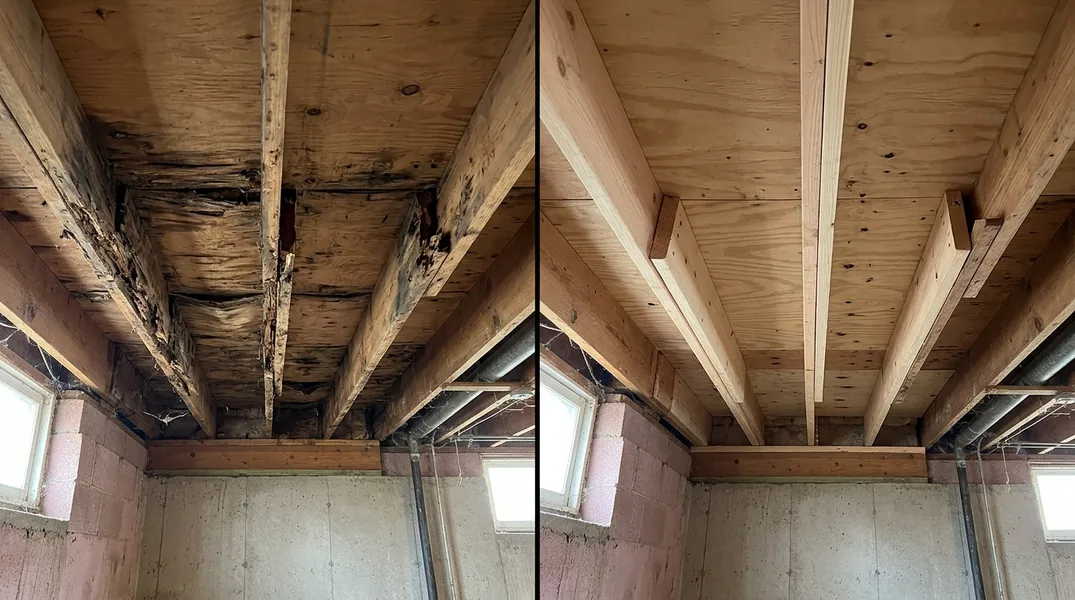
Why Damp Basements Lead to Sagging Floors
If you've noticed your first or second floor feeling spongy underfoot, or if doorways no longer close smoothly, the culprit often lies below. Damp basements create the perfect environment for wood to absorb moisture, swell, and eventually rot. Floor joists are particularly vulnerable because they span the width of your basement and sit directly above the source of moisture.
In Sioux Falls, where spring snowmelt and seasonal groundwater fluctuations are common, basement moisture is a persistent challenge for homeowners. When water vapor rises from a damp basement floor or seeps through foundation cracks, the wooden structural members overhead absorb that moisture. Over time, the wood loses its strength, compresses under the weight of the house, and the floor above begins to sag noticeably. This isn't just a cosmetic problem; it's a sign that your home's structural integrity is at risk.
Understanding Rim Joist Rot and Its Impact
The rim joist (also called the band joist) is the wooden beam that runs around the perimeter of your basement, connecting the foundation to the floor system above. Because it sits at or near grade level and is often in direct contact with exterior soil, the rim joist is extremely susceptible to moisture infiltration and decay. Wood Rot & Dry Rot Repair specialists identify rim joist rot as one of the most common structural problems in older homes and in basements with chronic moisture issues.
When rim joist rot develops, it undermines the entire support structure. The joist loses its ability to bear load, and the adjacent floor joists must compensate, causing them to bend or sag under pressure. In many cases, the rot spreads laterally along the joist, weakening a longer section of your floor frame. If left untreated, rim joist rot can eventually lead to catastrophic structural failure. Early detection and professional repair are essential to prevent further damage and maintain the safety of your home.
Common Causes of Floor Joist Failure Over Damp Basements
Several factors combine to create the conditions for floor joist deterioration in Sioux Falls basements. Poor drainage around the foundation is a leading cause; if gutters are clogged or downspouts discharge water too close to the house, moisture accumulates in the soil and eventually seeps into the basement. Cracks in the foundation, whether from settling or freeze-thaw cycles, allow water to enter directly. Inadequate or failed sump pump systems leave standing water in the basement, and high water tables in certain neighborhoods mean groundwater pressure pushes moisture through even intact foundations.
Additionally, older homes may lack proper vapor barriers under the basement floor, allowing moisture to wick up continuously. Plumbing leaks, particularly in supply lines running through the basement, can saturate joists for months before being discovered. Condensation from HVAC systems and poor ventilation compound the problem. Once wood moisture content exceeds 20 percent, wood-decay fungi begin to colonize the material. The wood becomes soft, loses structural capacity, and starts to sag. This is why addressing basement moisture is as important as repairing the damaged wood itself.
Sagging Floor Repair Options: From Sistering to Full Replacement
Floor Joist & Subfloor Repair can take several forms depending on the extent of damage. For joists that are still structurally sound but slightly weakened, or where rot is limited to a small section, sistering floor joists is often the most cost-effective solution. Sistering involves installing a new pressure-treated or solid wood joist alongside the damaged one, fastening them together so they act as a single, stronger member. This technique restores load-bearing capacity without removing the existing joist, which can be disruptive and expensive.
For more severe damage, where the joist is significantly compromised or rot has spread across multiple members, full joist replacement may be necessary. This involves removing the damaged joist and installing a new one in its place, a more involved process that requires temporary support beams to carry the floor load during work. In cases where the rim joist is severely rotted, specialized repairs or replacement of that perimeter beam are required. Beam Replacement & Load-Bearing Wall Removal expertise ensures that the structural integrity of your entire support system is restored. The right repair method depends on a professional assessment of the damage, the age of the home, and local building codes.
What to Expect During a Professional Inspection and Repair
When you call Sioux Falls Carpentry for a sagging floor evaluation, our team begins with a thorough basement inspection. We look for visible signs of moisture (staining, efflorescence, mold), probe suspect wood with a moisture meter and hardness tester, and assess the extent of rot or decay. We also identify the source of moisture and recommend solutions. Once we understand the scope of the problem, we provide a detailed repair plan and pricing estimate so you know exactly what to expect.
The repair process typically involves setting up temporary support posts or beams to carry the floor load, then systematically addressing damaged joists. If sistering is the solution, we install new joists alongside compromised ones and secure them with bolts or structural fasteners. If replacement is needed, we remove the old joist and install a new one, ensuring proper bearing on the foundation and correct spacing. Throughout the work, we maintain proper ventilation and address any moisture sources to prevent recurrence. Most residential projects take several days to a week, depending on complexity. After repair, we recommend moisture control measures such as sump pump maintenance, foundation sealing, or dehumidification to protect your investment.
Preventing Future Sagging: Moisture Control and Maintenance
Fixing sagging floors is important, but preventing the problem from returning is equally critical. Start by addressing basement moisture at the source. Ensure your gutters and downspouts direct water at least four to six feet away from the foundation. Inspect your foundation annually for cracks and seal them with hydraulic cement or polyurethane caulk. If you have a sump pump, test it regularly and keep the discharge line clear. Consider installing a dehumidifier in the basement to keep humidity below 60 percent, which inhibits mold and wood decay.
Regular inspections of your basement and crawl space are your first line of defense. Look for signs of water staining, soft or discolored wood, or musty odors. Catch problems early, and you can often avoid major structural repairs. If you notice a new sag in your floor or suspect moisture issues, don't wait. Contact Sioux Falls Carpentry at (605) 800-6259 to schedule a free estimate. Our experienced team will identify the root cause and recommend the most effective, affordable solution to restore your home's structural safety and stability.
Looking for a professional carpentry contractor in Sioux Falls? Sioux Falls Carpentry responds fast for all your carpentry needs.
Get a Free QuoteOur services: Wood Rot & Dry Rot Repair · Termite Damage Repair · Floor Joist & Subfloor Repair